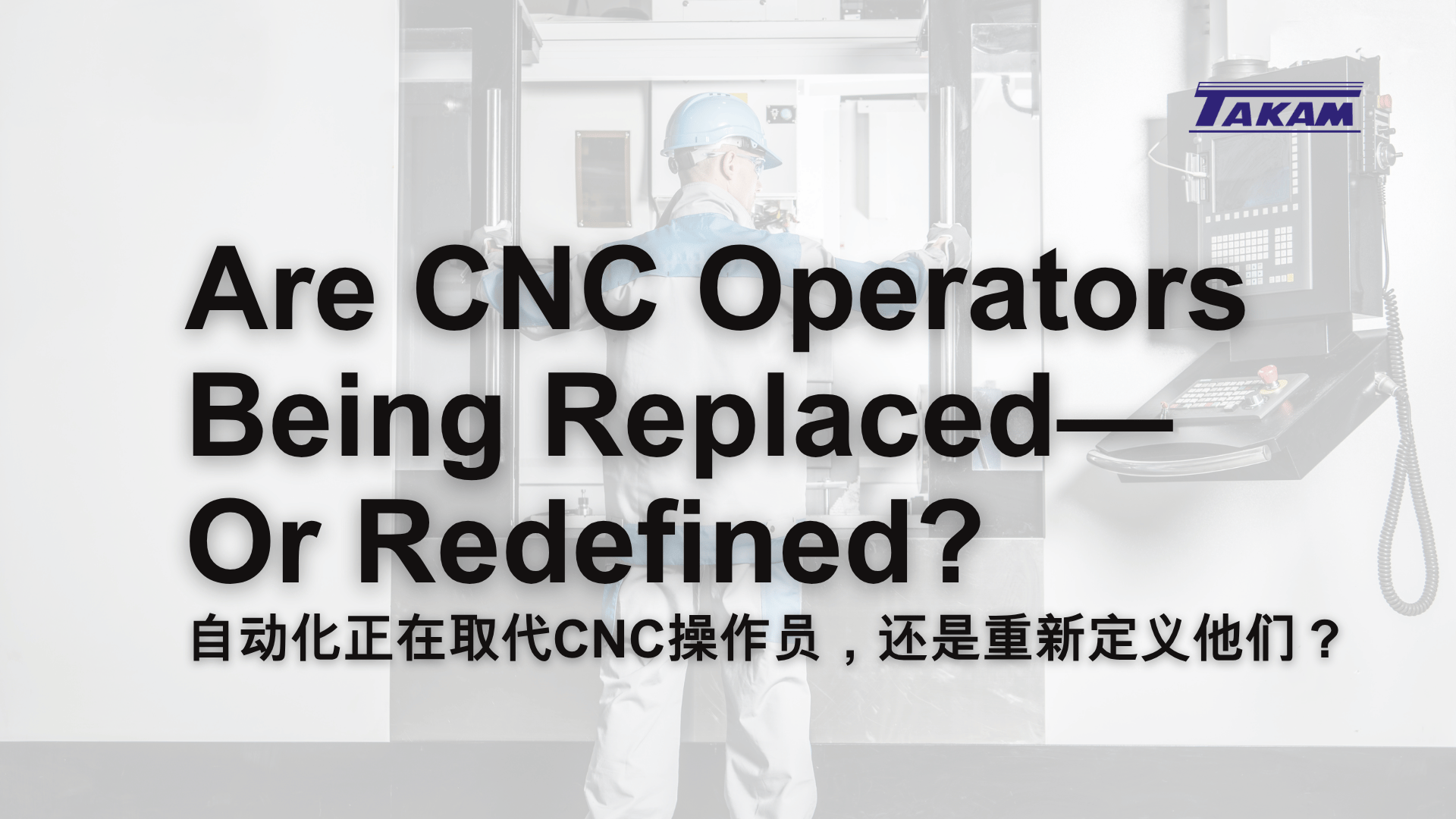
Are CNC Operators Being Replaced—Or Redefined?
Automation has become a defining trend in modern manufacturing. From automated tool changers to pallet systems and integrated robotic solutions, CNC environments are evolving rapidly. With these changes, a common question often arises: what happens to the role of CNC operators?
At first glance, the answer may seem straightforward. As machines become more automated, the need for manual intervention appears to decrease. Tasks that once required constant human attention—such as tool changes, part loading, and even basic monitoring—can now be handled by machines.
But the reality is more nuanced.
Automation does not eliminate the role of CNC operators. Instead, it reshapes it.
From Machine Operation to Process Oversight
Traditionally, CNC operators were closely tied to the machine itself. Their responsibilities focused on running programs, adjusting offsets, monitoring cutting conditions, and ensuring that parts were produced within tolerance.
In an automated environment, many of these tasks are reduced or assisted by the system. However, this does not mean that operators are no longer needed. Rather, their focus shifts from operating a single machine to overseeing an entire process.
Instead of standing next to one machine, operators are now responsible for multiple machines, monitoring performance, identifying irregularities, and ensuring that production runs smoothly across the system.
The Growing Importance of Decision-Making
Automation is highly effective at repeating defined tasks. It excels in consistency, speed, and reliability—provided that the conditions are stable.
However, manufacturing environments are rarely perfect.
Unexpected variations in material, tool wear, or machine behavior can still occur. When they do, human judgment becomes critical. Knowing when to intervene, how to adjust the process, and how to prevent issues from escalating requires experience and understanding.
In this context, the value of the operator shifts from physical involvement to decision-making.
Skills Are Changing, Not Disappearing
As automation increases, the skill set required for CNC operators evolves.
Manual adjustments and repetitive tasks become less central, while analytical thinking and system awareness gain importance. Operators are expected to understand not only how a machine runs, but how the entire production system functions.
This includes interpreting data, recognizing patterns, and anticipating potential issues before they affect production.
In other words, the role becomes less about “doing” and more about “understanding.”
Bridging the Gap Between Machine and Process
Automation systems are designed to streamline operations, but they still rely on proper setup, programming, and maintenance. CNC operators often serve as the bridge between the machine and the process.
They ensure that the system is correctly configured, that tools are prepared, and that programs are executed as intended. When something does not go as planned, they are the ones who identify the cause and implement corrective actions.
This bridging role becomes even more important as systems grow more complex.
The Human Factor Remains Essential
Despite advancements in automation, manufacturing remains a dynamic environment. Machines can follow instructions, but they do not fully understand context.
Human operators bring contextual awareness. They can adapt to changing conditions, make informed decisions, and respond to unexpected situations in ways that automated systems cannot fully replicate.
Rather than being replaced, operators become essential contributors to maintaining flexibility within an increasingly automated system.
A Shift, Not a Disappearance
The perception that automation replaces jobs often comes from viewing technology in isolation. In practice, automation changes how work is done, rather than removing it entirely.
In CNC machining, this shift is already visible. Operators are no longer defined solely by their interaction with a single machine. Instead, they are becoming coordinators of processes, interpreters of data, and decision-makers within a broader system.
Conclusion
Automation is undeniably transforming CNC machining. But it is not making operators obsolete.
It is redefining their role.
As machines take over repetitive tasks, operators move toward higher-level responsibilities—overseeing processes, making decisions, and ensuring overall system performance.
In this evolving landscape, the question is no longer whether CNC operators will remain relevant.
It is how their role will continue to adapt alongside the technology they work with.
When Does CNC Automation Stop Making Sense?
Your CNC Was Perfect—So What Changed?