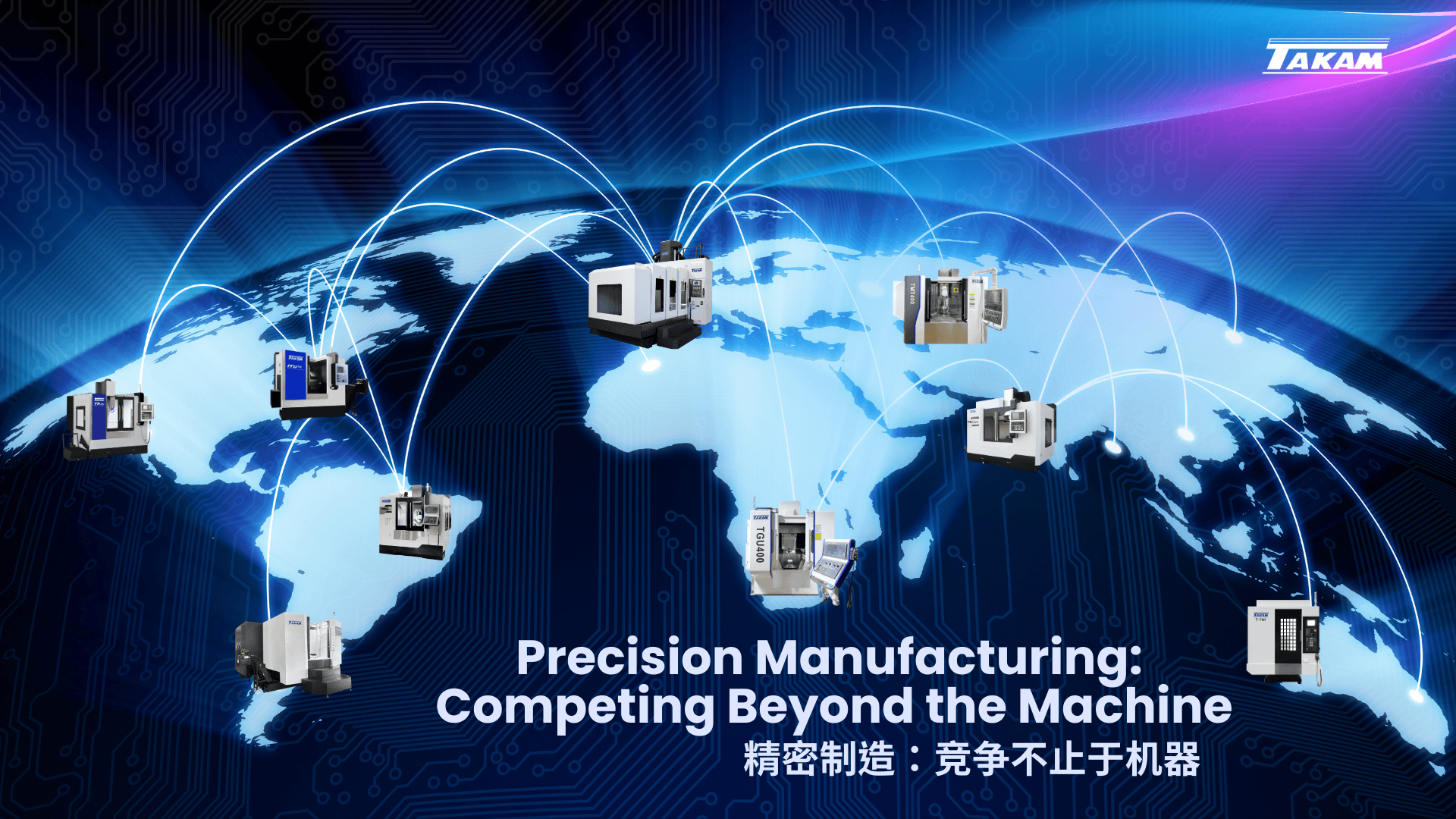
Precision Manufacturing: Competing Beyond the Machine
In the era of global industrial transformation, precision is the true measure of competitiveness. Whether it is aerospace, medical devices, semiconductors, or electric vehicles, manufacturers face the same challenge: delivering parts that are lighter, stronger, more reliable, and produced faster than ever before.
Yet, the debate is not about three-axis versus five-axis. Each type of machine serves a purpose:
-
Three-axis machining remains the backbone of mass production, offering stability and cost efficiency.
-
Five-axis machining enables complex geometries and fewer setups, essential for turbine blades, molds, and intricate housings.
-
Gantry machining centers handle massive structures such as aerospace frames and renewable energy components.
-
Tapping and milling centers deliver speed and efficiency for high-volume parts like smartphone casings or connectors.
Competitiveness comes from integration, not replacement. The strongest manufacturers build an ecosystem where every machine plays its role in the value chain.
At the same time, competition is not just about machines—it’s about who can adapt fastest.
-
Germany and Japan leverage strong machine tool heritage and integrated supply chains.
-
China is accelerating its push for domestic high-end machine tools to reduce dependency.
-
Taiwan and South Korea are carving a niche through flexibility, cost-performance balance, and innovation in automation.
But new challenges are rising. Skilled labor is becoming scarce; advanced machines are only as powerful as the engineers and programmers who operate them. Supply chain disruptions have shown that precision must also mean resilience. Meanwhile, digital transformation—AI-powered CAM, digital twins, predictive maintenance—will define the next phase of competition.
In the end, precision manufacturing is a race without a finish line. Winning requires more than buying advanced equipment; it demands strategy, integration, and the vision to connect technology with future market needs.
? The critical question for every manufacturer is not “Which machine is best?” but rather:
“How do we combine the right technologies, talent, and processes to stay competitive in the next decade?”
The Real Reason Modern CNC Machines Look Different
CNC Machinery in the Eye of the Supply Chain Storm