One Machine, One Arm, Infinite Possibilities
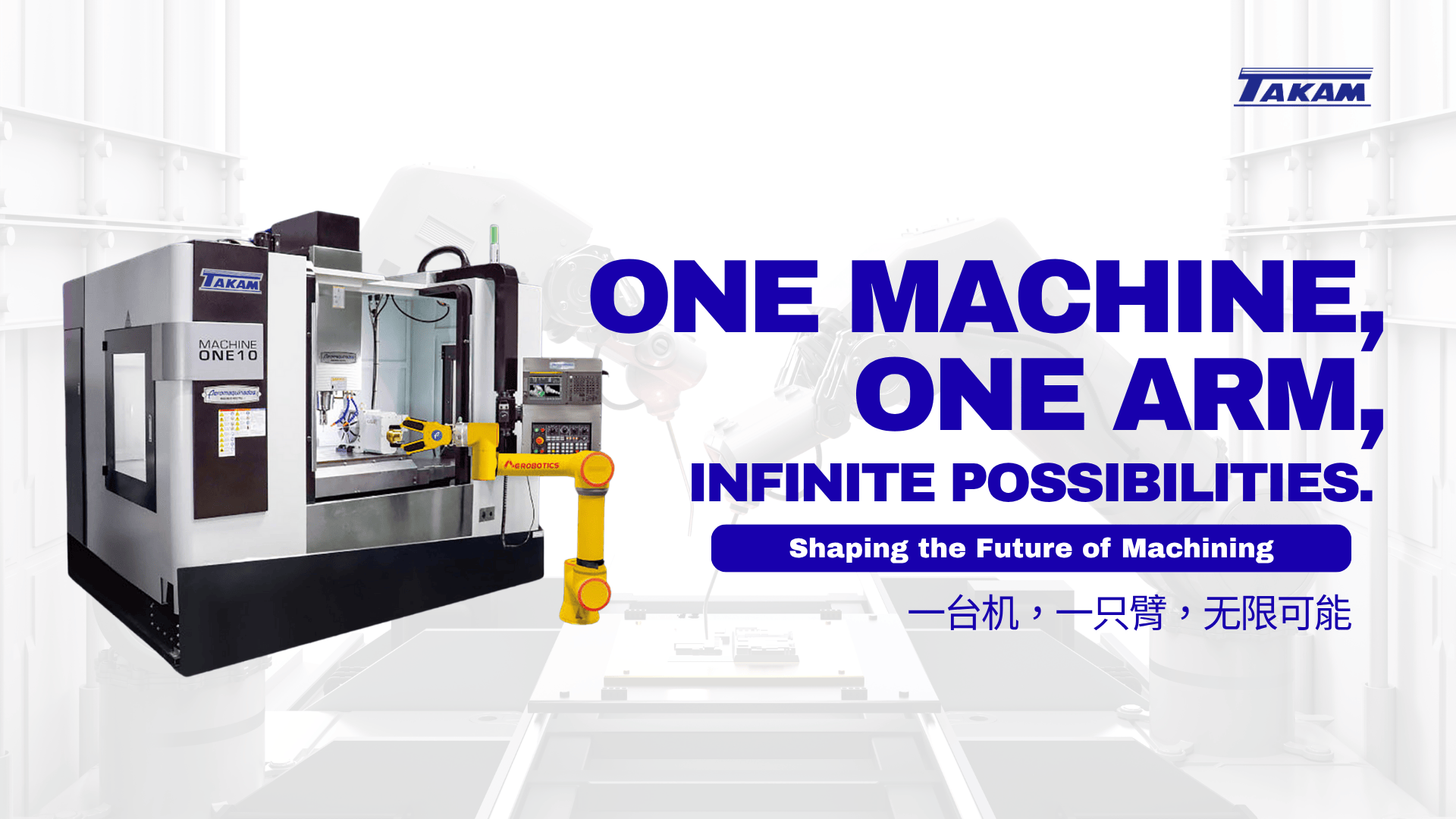
In the world of manufacturing, efficiency is everything. The race toward smarter, faster, and more flexible production has pushed factories to rethink how machines work — not just individually, but together. And that’s where the magic happens: when a CNC machine meets a robotic arm, something far greater is created than the sum of its parts.
From Automation to Intelligence
For decades, CNC machines have represented precision and repeatability — the backbone of modern machining. They execute complex toolpaths, maintain micron-level accuracy, and can run for hours without interruption. Yet, for all their sophistication, CNCs have traditionally relied on one human element: the operator.
Loading raw materials, unloading finished parts, changing fixtures — these were tasks outside the CNC’s domain. But as labor shortages and rising production demands reshape the industry, manufacturers have realized that true automation doesn’t end at the machine door.
By integrating CNC machines with robotic arms, the workflow transforms from automated machining to intelligent manufacturing. The robot becomes the bridge — connecting one process to the next, ensuring every cycle is consistent, continuous, and data-driven.
The CNC–Robot Synergy
Think of it as a partnership.
The CNC focuses on precision.
The robot focuses on motion.
Together, they create a system that never rests.
A single robotic arm can handle a wide range of operations — material loading, part flipping, deburring, pallet transfer, and even quality inspection. It communicates directly with the CNC through modern protocols such as Ethernet/IP, Profinet, or simple digital I/O. Once the handshake is complete, every cycle runs in perfect synchronization.
The result? Unmanned operation, reduced downtime, and optimized cycle time.
Factories that once required multiple operators per shift can now maintain production 24/7 with minimal supervision. And when properly configured, the entire cell can adapt to small-batch production — a crucial advantage in today’s high-mix, low-volume market.
From Lights-On to Lights-Out
The term “lights-out manufacturing” used to sound futuristic — a factory that runs in darkness, because no human presence is needed. But with CNC–robot integration, it’s no longer a dream.
Imagine a single CNC machining center equipped with an automatic door, a robotic arm, and a compact pallet or gripper system. Once the operator sets up the job, the robot takes over:
-
Loads raw workpieces
-
Closes the CNC door and triggers the machining cycle
-
Unloads the finished part
-
Places it on an inspection tray or into the next process
Cycle after cycle, hour after hour, without fatigue or variation. This seamless collaboration between man-made precision and robotic endurance defines the next chapter of smart manufacturing.
Beyond Labor Replacement — A Shift in Mindset
Automation is often misunderstood as a replacement for people. But in reality, it’s about redefining roles. When a robotic arm takes over repetitive handling tasks, operators can focus on higher-value activities: setup optimization, quality control, process improvement. The goal isn’t fewer people — it’s smarter work.
Integrating a robot also brings traceability and digitalization. Every motion, every cycle, every tool change can be monitored in real time. This data-driven insight helps manufacturers identify inefficiencies, plan maintenance, and continuously improve throughput.
Challenges Along the Way
Of course, integration is not plug-and-play. It demands thoughtful engineering.
-
The CNC controller must support external communication or M-code triggering.
-
The robot needs a reliable interface to coordinate timing and safety.
-
The layout must consider reach, accessibility, and cycle flow.
-
And the software must be intuitive enough for operators to manage daily production.
But with the right design — and the right partner — these challenges become opportunities for customization and growth. Many machine tool builders, including TAKAM, are developing flexible solutions where the CNC and robot communicate seamlessly, offering customers complete automation cells tailored to their production needs.
A Gateway to the Smart Factory
CNC–robot integration is not just about automation — it’s the foundation of the smart factory.
Once connected, these systems can link to MES or ERP platforms, enabling centralized monitoring, predictive maintenance, and even remote control. In other words, each machine–robot pair becomes a node in an intelligent network — self-reporting, self-optimizing, and constantly learning.
This is where the journey from automation to autonomy truly begins.
Infinite Possibilities
“One Machine, One Arm, Infinite Possibilities” isn’t just a catchy phrase.
It represents a mindset — that innovation often starts small. One machine. One robot. One idea.
But together, they unlock new capabilities:
-
Unmanned night shifts
-
Consistent quality across batches
-
Flexible manufacturing cells that scale with demand
-
And the confidence that every part produced meets the highest standards
In today’s competitive manufacturing world, success isn’t about owning more machines — it’s about making every machine smarter. And when your CNC works hand in hand with a robot, the possibilities truly become infinite.
Beyond Microns: Leveling Defines Precision
Keep the Line Moving — The Power of APC