
BENEFITS OF COOLANT THROUGH THE SPINDLE ON VMC.
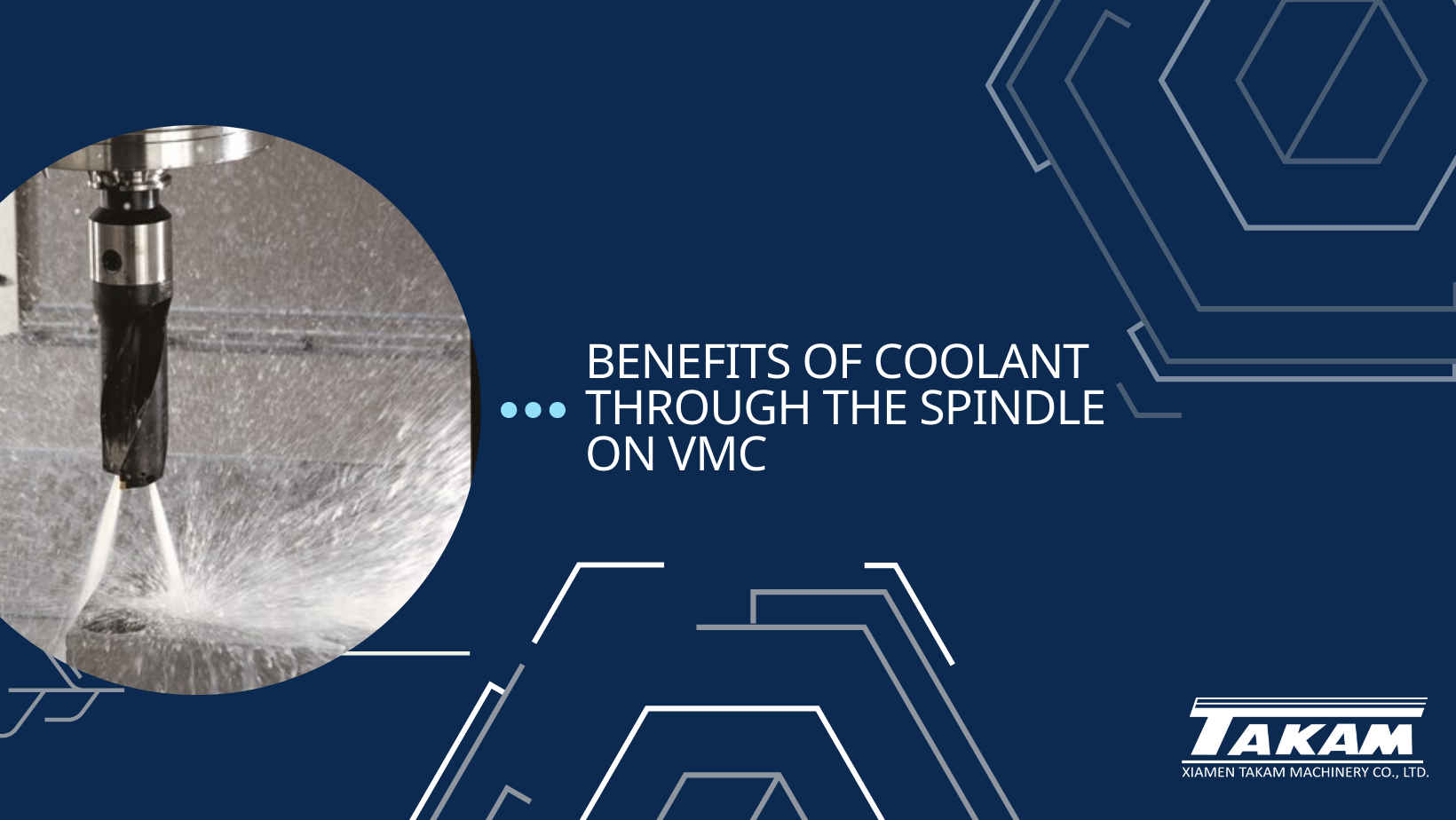
Coolant through the spindle (CTS) is a feature in Vertical Machining Centers (VMCs) that involves delivering coolant directly through the spindle and tool during machining operations. Here are some of the benefits of using coolant through the spindle on a VMC:
Improved Tool Life: CTS helps dissipate heat generated during machining more effectively, reducing tool wear and extending tool life. By cooling the cutting edge directly, it prevents overheating and premature tool failure, especially during high-speed machining operations.
Enhanced Machining Performance: Cooling the cutting zone with coolant through the spindle allows for higher cutting speeds and feeds, resulting in faster machining cycles and increased productivity. It also enables more aggressive cutting parameters, leading to improved surface finish and dimensional accuracy of machined parts.
Better Chip Evacuation: The coolant delivered through the spindle helps flush away chips and debris from the cutting zone more efficiently. This reduces the risk of chip recutting, which can result in poor surface finish and tool damage. Improved chip evacuation also contributes to better overall process stability and reliability.
Increased Machining Efficiency: With CTS, operators can perform both coolant delivery and lubrication functions simultaneously, eliminating the need for additional coolant nozzles or external coolant systems. This simplifies setup, reduces tool change time, and minimizes manual intervention during machining operations, leading to increased efficiency and reduced downtime.
Minimized Thermal Expansion: By maintaining consistent temperatures at the cutting zone, coolant through the spindle helps minimize thermal expansion of workpieces and cutting tools. This results in improved machining accuracy and dimensional consistency, particularly for precision machining applications and tight tolerance requirements.
Reduced Risk of Workpiece Deformation: Effective cooling provided by CTS helps control workpiece temperature during machining, reducing the risk of thermal distortion or deformation. This is particularly beneficial when machining materials prone to thermal expansion or those requiring close dimensional tolerances, such as aerospace alloys or heat-treated steels.
Enhanced Tooling Flexibility: CTS enables the use of a wider range of cutting tools, including high-performance tools with specialized coatings or geometries optimized for specific machining applications. This flexibility allows operators to choose the most suitable tooling for the job while maximizing tool life and machining efficiency.
Overall, coolant through the spindle offers significant advantages in terms of tool life, machining performance, process efficiency, and part quality, making it a valuable feature for modern VMCs in various manufacturing environments.
What Type of CNC Coolant Should I Use?
How hydraulic system works in CNC machines?