
Essential Steps for Safely Unloading Your CNC Machine Tool from the Container
author: Takam
2025-01-06
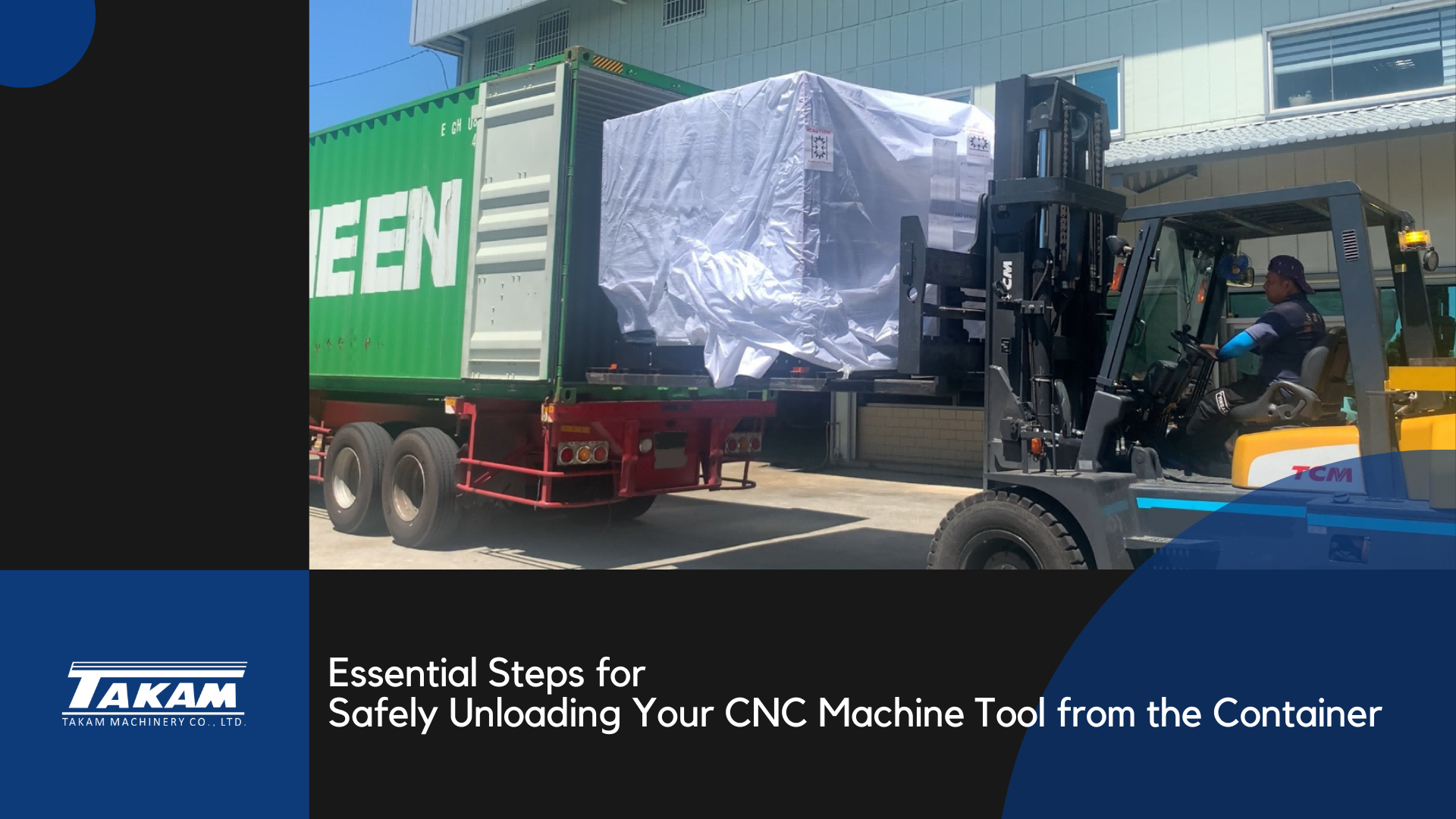
When taking a CNC machine tool out of its container, there are several important steps and precautions to ensure safety and proper handling. Here’s a guide on what to pay attention to:
Preparation:
- Safety Gear: Ensure that everyone involved is wearing appropriate personal protective equipment (PPE) such as gloves, safety glasses, steel-toed boots, and hard hats.
- Tools and Equipment: Have the necessary tools and equipment ready, such as forklifts, pallet jacks, straps, wrenches, and crowbars.
- Space Clearance: Ensure that there is enough space around the container to safely maneuver the machine out.
Inspection:
- Check Documentation: Review all shipping and handling instructions provided by TAKAM. This includes the operator’s manual and any specific unloading instructions.
- Inspect Container: Check the container for any signs of damage that could have affected the machine during transport.
- Verify Condition: Inspect the machine for any visible damage before unloading. Look for any loose parts or packing materials that might have shifted during transit.
Unloading:
- Secure Machine: Ensure the machine is securely strapped or bolted within the container. Carefully remove any restraints or supports while ensuring the machine remains stable.
- Use Proper Equipment: Utilize appropriate lifting equipment such as forklifts or cranes that can handle the weight and dimensions of the machine.
- Lift Safely: Ensure that the lifting points on the machine are used correctly to avoid tipping or damaging the machine. Follow the manufacturer’s guidelines for lifting.
Handling:
- Stabilize the Load: Make sure the machine is balanced and secure before moving it. Use straps or chains as needed to keep it stable.
- Move Slowly: Transport the machine slowly and carefully to avoid sudden movements that could cause it to shift or fall.
- Avoid Obstacles: Clear the path of any obstacles and ensure the surface is even to prevent tipping or slipping.
Placement:
- Positioning: Place the machine in its designated location, ensuring that it is level and stable.
- Final Inspection: Perform a final inspection to ensure that no damage occurred during unloading and that all components are intact.
- Remove Packing Materials: Carefully remove any remaining packing materials and secure all parts and accessories.
Post-Unloading:
- Check Connections: Verify all electrical, hydraulic, and pneumatic connections as per the installation guidelines.
- Calibration: Perform any necessary calibration or setup procedures as outlined in the operator’s manual.
- Operational Check: Run initial operational checks to ensure the machine is functioning correctly before full use.
Documentation:
- Record Keeping: Document the condition of the machine upon arrival and any issues encountered during unloading. Keep records for future reference and warranty purposes.
Following these steps will help ensure that your CNC machine tool is safely and correctly removed from its container, minimizing the risk of damage and ensuring a smooth setup process.
Common processing problems of machine tools
Optimizing CNC Machine Performance: The Importance of Warming Up