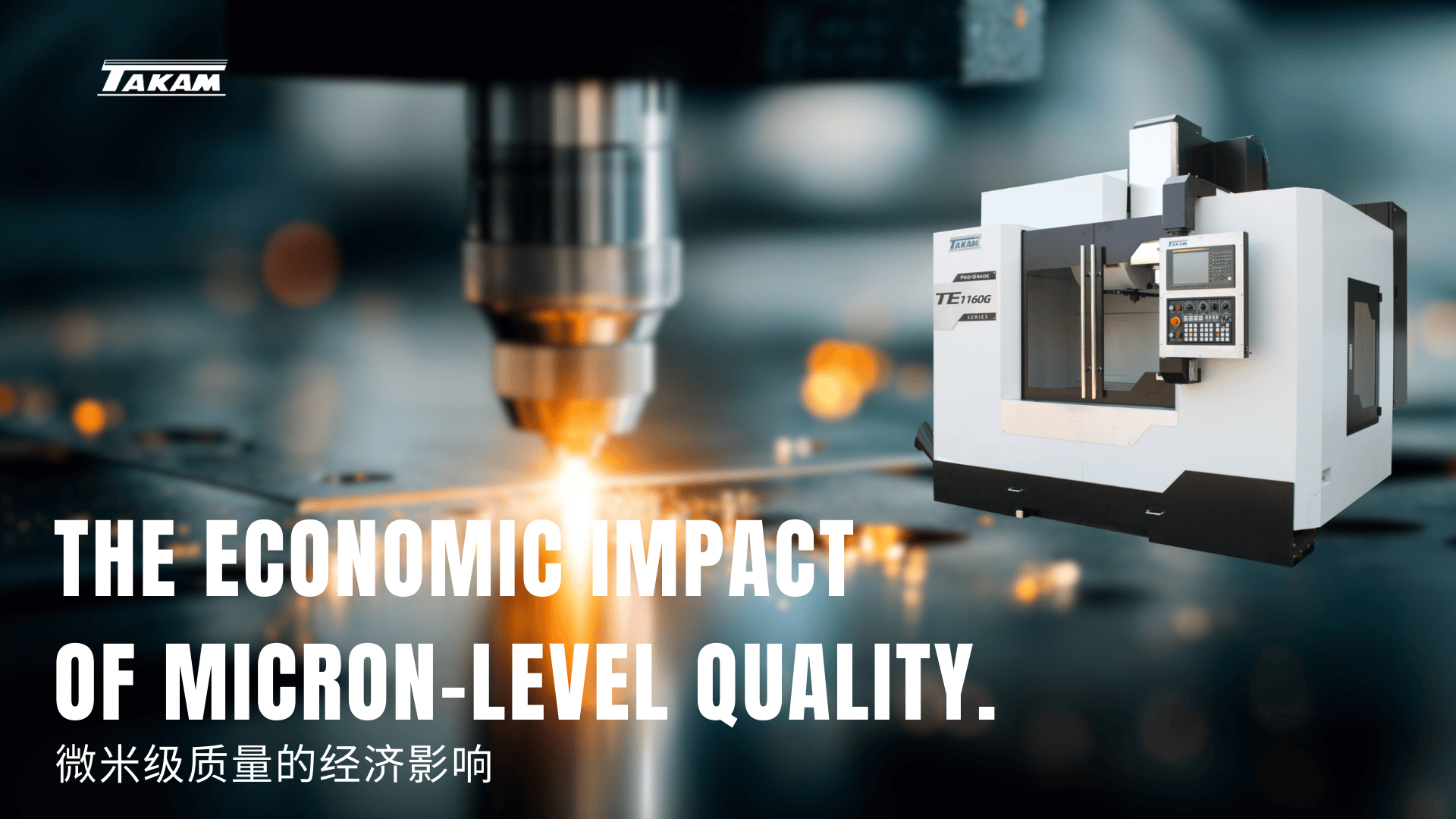
The Economic Impact of Micron-Level Quality.
Precision has always been a cornerstone of advanced machining, but the expectations of today’s market have elevated it to an economic accelerator. In many industries, delivering quality within a few microns is no longer a premium feature—it is a necessity that directly shapes production costs, brand reputation, and long-term competitiveness.
Micron-Level Accuracy as a Business Multiplier
Manufacturers often view precision as a technical achievement, yet it has a far broader financial impact. When micron-level tolerance is achieved consistently, several economic benefits follow:
-
Lower scrap and rework costs
-
Longer tool life and steadier machine performance
-
Higher process predictability and reduced downtime
-
Improved customer satisfaction and repeat orders
Every micron saved is a cost saved. For companies operating under tight margins, this difference accumulates into real profitability.
Industries Where Microns Determine Millions
-
Aerospace – Flight-critical parts cannot deviate from tolerance ranges; a micron deviation may cause vibration issues or structural risk.
-
Medical device manufacturing – Implants, surgical components, and precision tools demand exact dimensions to ensure safety.
-
Semiconductor and electronics – Even minor inaccuracies can cause assembly failures or heat generation problems.
-
EV and battery manufacturing – Precision ensures performance, consistency, and longer product lifecycle.
In these sectors, micron-level errors can result in batch recalls, warranty claims, or even halted production lines—each carrying multimillion-dollar consequences.
How CNC Machines Enable Micron-Level Quality
Modern CNC machines integrate mechanical rigidity, thermal stability, and intelligent control algorithms to maintain tight tolerances even under long machining cycles. Key contributors include:
-
High-rigidity structures that reduce vibration
-
Linear scales for closed-loop feedback
-
Thermal compensation systems that adapt to environmental shifts
-
Advanced controllers capable of optimizing toolpaths in real time
When combined, these technologies ensure that precision is not limited to a single part but sustained across thousands of cycles.
Hidden Costs of “Good Enough” Quality
Some factories still operate with a tolerance philosophy that prioritizes “acceptable” over “optimal.” The economic risks include:
-
Excessive tool wear due to unstable machining conditions
-
Increased inspection time
-
Extra buffers in assembly lines
-
Higher failure rates during functional testing
-
Customer complaints and reduced trust
The cost of poor quality (COPQ) is often invisible until accumulated. A micron missed today may become a warranty case tomorrow.
The Path Forward: Precision as a Long-Term Strategy
Companies that invest in precision-driven processes gain measurable advantages:
-
Predictable production cost
-
Consistent quality recognized by OEM customers
-
Capability to enter high-value markets
-
Stronger global competitiveness
Micron-level quality is not simply an engineering target—it is a strategic investment. In a competitive world where margins are thin and customer expectations continue to rise, precision becomes the most powerful differentiator.
Cycle Time Optimization: Small Adjustments, Massive Savings
Inside the Source of CNC Vibration