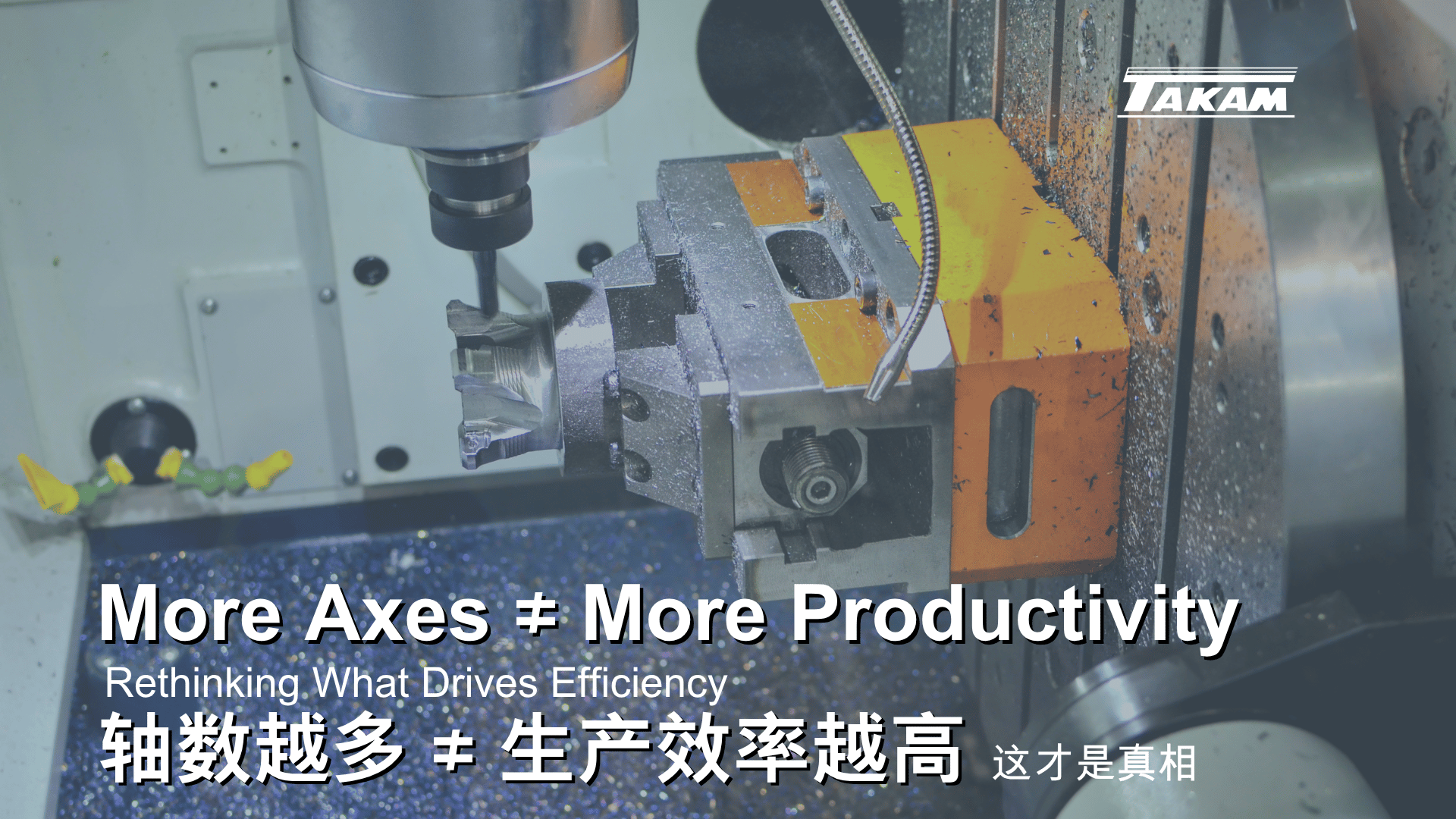
What Every CNC Cycle Depends On

In CNC machining, productivity discussions often revolve around spindle speed, cutting parameters, controller performance, or axis accuracy. These elements are critical, no doubt. But there is one component that quietly influences every single machining cycle — yet rarely gets the attention it deserves.
The tool magazine.
It doesn’t cut metal. It doesn’t define surface finish. And it rarely appears in marketing highlights.
Still, every CNC cycle depends on it.
Tool Change Is Not “Non-Cutting Time” — It’s System Time
Tool change is often categorized as non-cutting time, something to be minimized or ignored. But in reality, tool change time is system time. It directly affects cycle consistency, uptime, and reliability — especially in automated or long-running production environments.
A CNC machine may have a powerful spindle and high-speed axes, but if tool changes are slow, unstable, or prone to errors, the entire process suffers. Over hundreds or thousands of cycles, even small inefficiencies add up to significant losses.
More importantly, a problematic tool magazine doesn’t just slow production — it introduces risk.
Reliability Matters More Than Speed
In real-world machining, the fastest tool change is not always the best one.
What matters more is repeatability.
A tool magazine must perform the same motion, with the same positioning accuracy, thousands of times — often under harsh conditions: vibration, heat, coolant mist, and chips. Any deviation can lead to tool misalignment, gripper wear, dropped tools, or even spindle damage.
For high-mix, low-volume production, or complex multi-operation parts, reliability becomes even more critical. An unstable tool change can interrupt an unattended run, forcing operators to intervene and negating the benefits of automation.
In this context, the tool magazine is not a peripheral component — it is a reliability system.
More Tools, More Complexity
As machining processes become more complex, tool counts increase.
Large structural parts, aerospace components, and multi-face machining often require dozens — sometimes over a hundred — tools. Each additional tool increases the mechanical and control complexity of the magazine system.
At this scale, design choices matter:
- Chain-type vs. disk-type magazines
- Servo-driven vs. cam-driven mechanisms
- Tool weight limits and balance
- Tool position confirmation and sensing
A well-designed tool magazine manages this complexity quietly and consistently. A poorly designed one turns tool management into a bottleneck.
The Hidden Link to Machining Accuracy
Tool magazines are not isolated systems. They interact directly with the spindle, the ATC arm, and the machine structure.
In large machines or heavy-duty cutting applications, tool weight and inertia become significant factors. A tool magazine that lacks sufficient rigidity or positioning accuracy can introduce micro-misalignment during tool transfer. Over time, this affects tool life, cutting stability, and even part accuracy.
This is why high-end machining centers often invest heavily in tool magazine design — not for speed alone, but for long-term stability.
Automation Depends on Tool Management
Lights-out machining, pallet systems, and flexible manufacturing cells all rely on one assumption: the machine can manage tools without human intervention.
Tool magazines are central to this assumption.
From tool life management to tool identification and safe storage, the magazine becomes part of the automation logic. A missed tool, incorrect pocket assignment, or failed change can halt an entire production cell.
In automated environments, the tool magazine is no longer a mechanical accessory. It becomes an operational backbone.
Designing for the Real Shop Floor
The best tool magazine designs are not optimized for brochures — they are optimized for reality.
They consider:
- Chip contamination
- Coolant exposure
- Thermal expansion
- Maintenance accessibility
- Long-term wear, not just initial performance
These details rarely appear in specifications, but they define how a machine performs after years of operation.
A CNC machine is judged not by how fast it runs on day one, but by how consistently it performs over time.
Rethinking What “Performance” Means
As the CNC industry continues to push for higher speed and higher precision, it’s worth stepping back and rethinking what performance truly means.
Performance is not just cutting speed. It’s uptime. It’s predictability. It’s confidence during unattended operation.
And much of that performance depends on components that work quietly in the background.
Like the tool magazine.
Final Thoughts
The next time we evaluate a CNC machine — whether as builders, users, or decision-makers — it’s worth looking beyond the obvious specifications.
Ask how the machine manages its tools. Ask how it handles complexity. Ask how it performs after thousands of cycles, not just the first hundred.
Because the most overlooked components often have the greatest impact
Why Stability Matters in Large-Part Machining
What Really Determines CNC Machine Uptime