Enhancing CNC Lathes: The Introduction and Benefits of the C-Axis
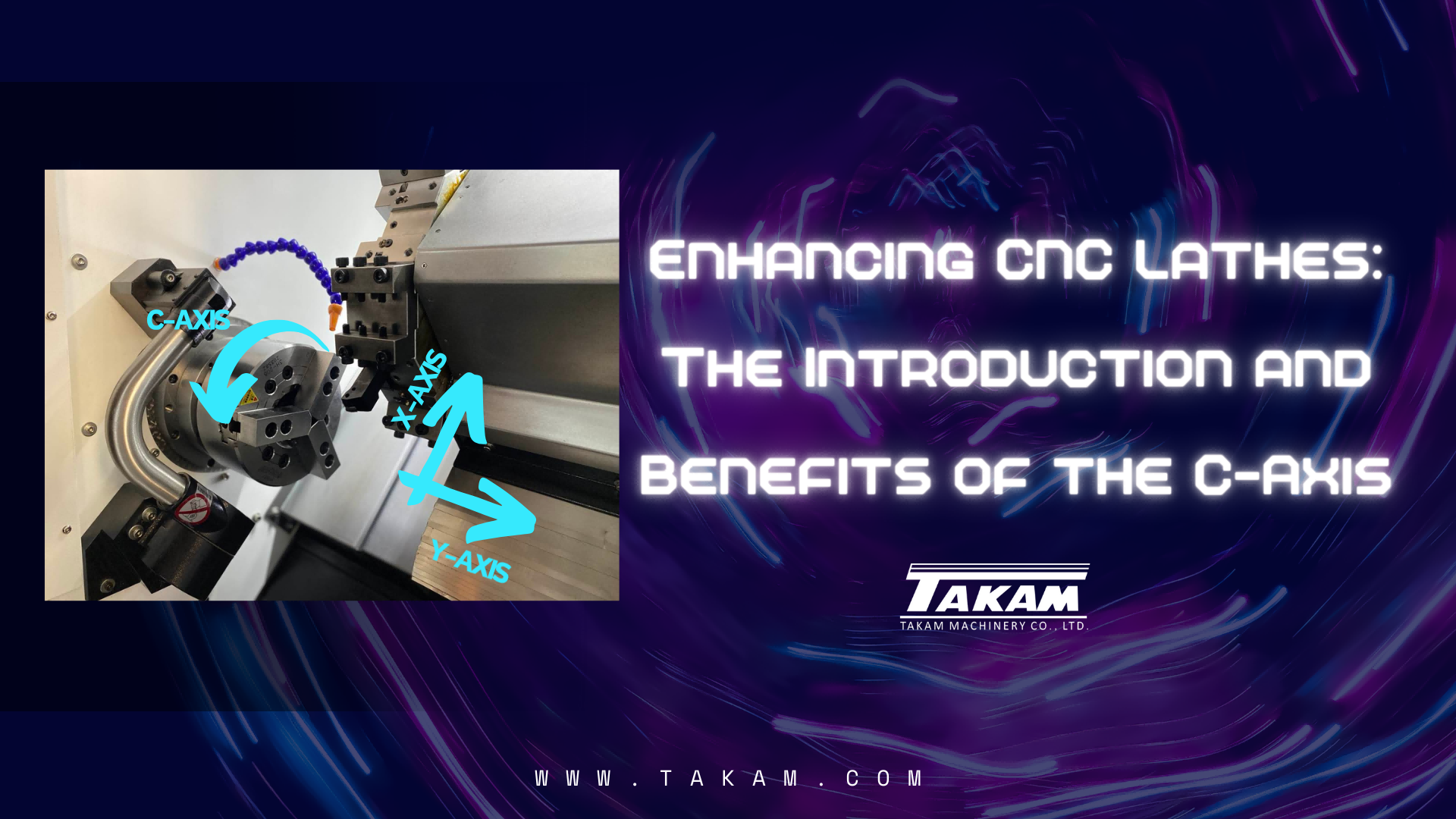
In CNC (Computer Numerical Control) lathes, the C-axis is an additional axis of motion that enhances the machine's capabilities, particularly in terms of milling and turning operations. Here is an overview of the C-axis and its role in CNC lathes:
Understanding the Axes in CNC Lathes
- Primary Axes (X and Z):
X-axis: Controls the lateral movement of the cutting tool, perpendicular to the spindle axis.
Z-axis:Controls the longitudinal movement of the cutting tool, parallel to the spindle axis.
The C-axis allows for rotational positioning of the workpiece around the spindle axis (which is typically aligned with the Z-axis). This axis is usually denoted as rotational movement in degrees (0 to 360°).
Importance and Applications of the C-axis
- Rotational Positioning:
With the C-axis, the spindle can be precisely controlled to rotate the workpiece to specific angular positions. This is crucial for machining features that require precise angular alignment.
- Milling Operations:
The addition of the C-axis allows the lathe to perform milling operations, transforming it into a multitasking machine. It can mill flat surfaces, grooves, keyways, and other complex features that would otherwise require separate milling operations.
- Complex Geometry:
By coordinating the C-axis with the X and Z axes, CNC lathes can create complex geometries and intricate features on the workpiece. This is particularly beneficial for parts that require multiple operations or intricate designs.
- Increased Efficiency:
Integrating the C-axis reduces the need to transfer the workpiece between different machines, enhancing efficiency and reducing setup times. This consolidation of operations can lead to significant time and cost savings.
How the C-axis Works
- Rotary Encoder: The spindle is equipped with a rotary encoder that provides precise feedback on its angular position. This feedback is used to control the rotation accurately.
- Live Tooling: CNC lathes with a C-axis often include live tooling, which allows the use of powered cutting tools. These tools can perform various milling and drilling operations while the workpiece is held in place by the spindle.
- Programming: The C-axis is programmed using CNC code (G-code). Specific commands control the rotational movement, allowing for precise angular positioning and synchronized motion with the X and Z axes.
Practical Example
Consider machining a part that requires several radial holes around its circumference. With a traditional lathe, this would necessitate moving the workpiece to a milling machine. However, with a CNC lathe equipped with a C-axis:
1.The workpiece is rotated to the desired angle using the C-axis.
2.The live tooling is engaged to drill the hole.
3.The workpiece is then rotated to the next angular position, and the process is repeated.
Conclusion
The introduction of the C-axis in CNC lathes greatly expands their functionality and versatility. It enables the execution of complex machining tasks that require precise angular control and milling operations, ultimately leading to more efficient manufacturing processes and the ability to produce intricate parts in a single setup.
Comparative Analysis of Single Spindle and Dual Spindle Lathes: Applications, Advantages, and Disadvantages
Streamlining Lathe Workflows: Unveiling the Power of Automatic Bar Feeders